
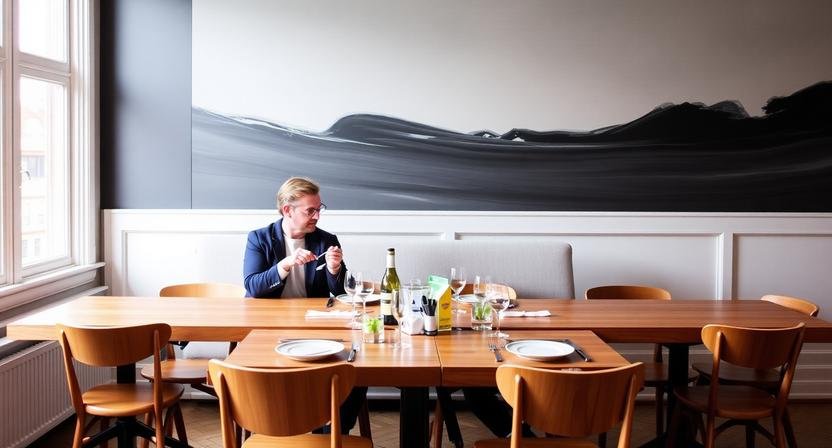
Imagine a business meeting where the conversation flows as smoothly as the coffee, where deals are sealed not in sterile boardrooms but over shared plates of herring and crispbread. This is the essence of a bjudlunch. More than just a free meal, a bjudlunch (literally “invitation lunch”) is a deeply embedded Swedish professional ritual. It builds trust, fosters open dialogue, and strengthens relationships in a way that few other business customs can. Understanding its nuances is not just polite; it’s a critical key to unlocking successful partnerships in the Swedish market. This guide will walk you through every aspect, from its cultural roots to modern execution.
Fundamentally, a bjudlunch is a lunch hosted and paid for by one party, typically a company inviting clients, partners, or candidates. The focus keyword, bjudlunch, represents a practice where business and social interaction blend seamlessly. Unlike a quick working lunch, it is an unhurried affair, often lasting up to two hours. The primary goal is relationship-building (relationsskapande), not just transactional discussion. In Sweden’s consensus-driven and low-hierarchy business culture, this informal setting levels the playing field. It allows for the famous “Lagom” principle—just the right amount of business and pleasure. Consequently, knowing how to navigate a bjudlunch can make or break your professional endeavors here.
Why the Bjudlunch is a Cornerstone of Swedish Business Culture
The bjudlunch is not a random tradition. It stems from Sweden’s specific social and business ethos. Understanding the “why” behind it helps you appreciate its importance and participate authentically.
First, it aligns with a flat organizational structure. Swedish companies famously minimize power distance. A manager and an intern often interact on a first-name basis. The bjudlunch extends this principle outwards. By hosting a meal, the inviter creates a neutral, respectful space. This environment encourages more honest conversation than a formal office meeting might.
Second, it values long-term relationships over short-term gains. Swedes are generally cautious in business and prefer to build trust slowly. A bjudlunch is an investment in that trust-building process. It shows you are willing to dedicate time and resources to get to know your counterparts as people, not just business entities. This practice is a cornerstone of effective Swedish business etiquette.
Third, it facilitates the “Fika” mentality on a larger scale. Fika, the beloved coffee break, is a sacred pause for connection. The bjudlunch is essentially an extended, more substantial version of this. It’s a dedicated pause in the day to connect, discuss, and collaborate without the immediate pressure of a deadline looming.
Key Insight: Many foreign professionals mistake the bjudlunch for a simple sales pitch opportunity. This is a major misstep. The direct hard sell during the meal is frowned upon. Let the relationship develop naturally through conversation.
Planning and Executing a Flawless Bjudlunch: A Step-by-Step Guide
Hosting a successful bjudlunch requires careful thought. It’s a reflection of your company’s professionalism and respect for the guest. Follow these steps to ensure a positive and productive experience.
1. The Invitation and Scheduling
The invitation sets the tone. Always extend the invitation clearly and well in advance—at least one to two weeks. Be explicit that it is a bjudlunch (you are hosting). Use polite, informal language. For example, “Hej [Name], skulle du och [colleague’s name] vilja bjudas på lunch nästa vecka? Vi skulle vilja träffas och lära känna er bättre.” Timing is crucial. Schedule it between 11:30 AM and 1:00 PM, typically for 1.5 hours. Avoid Mondays and Fridays if possible.
2. Choosing the Perfect Restaurant
The venue choice sends a strong message. You want a restaurant that is:
-
Quiet enough for conversation: Avoid noisy pubs or crowded lunch buffets.
-
Mid-range in price and ambiance: An overly fancy restaurant can seem ostentatious, while a too-casual spot may seem disrespectful. A good quality “husmanskost” (traditional Swedish home cooking) restaurant is often a perfect choice.
-
Centrally located and convenient for the guest: Consider their office location.
-
Has a good reputation: Check reviews for consistent service and food quality.
Always book a table in advance and mention it’s a business lunch.
3. Crafting the Agenda and Conversation Flow
While there’s no formal agenda, have a mental structure:
-
First 20-30 minutes: Social talk. Discuss non-business topics like summer house plans, recent holidays, or a neutral current event. This is the “warm-up” period.
-
Middle 45-60 minutes: Gradually steer the conversation toward business. Pose open-ended questions. Listen more than you talk. This is where mutual interests are explored. The business relationship building happens here.
-
Final 15-20 minutes: Summarize any agreed-upon next steps lightly. Return to more social talk as you finish coffee. The host should signal the end by asking for the check.
4. Navigating the Meal: Etiquette and Dos & Don’ts
Mastering the subtle etiquette is what separates a good host from a great one.
The Do’s:
-
Do let the guest choose their seat first.
-
Do suggest dishes or mention what the restaurant is known for.
-
Do offer a drink (like water, a soft drink, or perhaps a light beer/cider—wine is less common but acceptable). Follow the guest’s lead on alcohol.
-
Do make eye contact during toasts (“Skål!”), which is done subtly and often without clinking glasses loudly.
-
Do be prepared to pay discreetly. Excuse yourself to the restroom and pay at the bar, or give your card to the waiter discreetly when the coffee is served.
The Don’ts:
-
Don’t discuss money, specific contract details, or deliver a hard sell.
-
Don’t look at your phone unless absolutely urgent (and always apologize).
-
Don’t rush the meal or talk with your mouth full.
-
Don’t make a show of paying the bill; it should be done gracefully.
Common Bjudlunch Pitfalls and How to Avoid Them
Even with good intentions, mistakes happen. Here are the most frequent errors and how to sidestep them.
| Pitfall | Why It’s a Problem | The Solution |
|---|---|---|
| Talking Business Immediately | Comes across as pushy and transactional, breaking Swedish social norms. | Dedicate the first quarter of the meal exclusively to personal, light conversation. |
| Choosing a Noisy or Inappropriate Venue | Hinders conversation, makes the meeting feel like an afterthought. | Always visit or thoroughly research the restaurant online. Prioritize atmosphere over trendiness. |
| Dominate the Conversation | Prevents you from listening and learning about your guest’s needs and perspectives. | Practice the 70/30 rule: let the guest speak 70% of the time. Use thoughtful questions. |
| Handling the Bill Awkwardly | Can create a moment of discomfort or implied obligation. | As the host, make payment inevitable and invisible. A simple “Jag tar notan” (I’ll take the check) suffices. |
| Inviting Too Many People | Large groups prevent deep conversation and intimacy. | Keep it to 2-4 people total. One-on-one or two-on-two is ideal for a genuine professional networking meal. |
Another major pitfall is neglecting follow-up. The bjudlunch is the beginning, not the end. Always send a thank-you email within 24 hours. Reference something personal you discussed (e.g., “Tack för en trevlig lunch igår, och lycka till med båtturen i helgen!”) before gently mentioning the business next steps you discussed. This connects the personal bond to the professional pathway.
The Tangible Benefits: What a Successful Bjudlunch Achieves
When done correctly, the return on investment for a bjudlunch is significant. It goes far beyond the cost of the meal.
First, it builds authentic trust. In a digital age, face-to-face interaction is more valuable than ever. Sharing a meal is a universal human bonding experience. It allows parties to see each other’s body language, humor, and values. This builds a foundation of trust that email or video calls simply cannot. This trust is the bedrock of long-term business partnerships in Sweden.
Second, it unlocks informal information. The relaxed setting often leads to more open sharing. You might learn about a company’s upcoming challenges, unofficial opinions on a project, or insights about the industry that would never appear in a formal report. This intelligence is gold for strategic planning.
Third, it resolves conflicts smoothly. If there is a minor tension or misunderstanding, a bjudlunch provides a perfect, neutral ground to address it. The informal tone makes it easier to say, “I was thinking about what you said last week, and I wanted to understand your perspective a bit better…” This can defuse issues before they escalate.
Finally, it strengthens your personal brand. By hosting a thoughtful, well-executed bjudlunch, you demonstrate professionalism, cultural sensitivity, and social competence. You are seen as someone who understands “how things are done here.” This reputation is invaluable.
Practical Insight: One Swedish manager shared, “We would never sign a contract with someone we haven’t shared a meal with. The lunch tells me everything I need to know about their character and whether I want to work with them for years to come.”
Adapting the Bjudlunch for Remote and International Contexts
The global shift to remote work poses a challenge to this tradition. However, the core principle of dedicated, informal relationship-building can be adapted.
The Virtual Bjudlunch: This involves sending a food delivery voucher (like a Wolt or Foodora gift card) to your guest in advance. You then schedule a video call where you both eat your delivered lunches “together.” The rules remain: social chat first, no hard sales, keep it informal. It’s a thoughtful gesture that bridges the physical gap.
For International Visitors: If you are a non-Swede hosting for Swedish guests, your effort to adhere to the custom is highly appreciated. You can even acknowledge it lightly: “I understand the importance of a good bjudlunch in Sweden, so I hope this place is okay.” It shows respect and homework. Conversely, if you are invited, always accept unless absolutely impossible—it’s a sign of serious interest.
FAQ: Your Bjudlunch Questions Answered
Who should pay for a bjudlunch?
The party who extended the invitation is unequivocally the host and pays for everything. There is no “splitting the bill” (dela nota) unless it was explicitly agreed upon beforehand, which is very rare. The gesture of hosting is central to the concept.
What should I talk about during the lunch?
Start with safe, personal topics: travel, sports (like hockey or football), food, culture, or general observations about Sweden (positively framed). Avoid deeply personal finance, politics, or religion. Let business topics arise organically in the middle of the meal. Good conversation starters include asking about the guest’s summer cottage (sommarstuga) or recent travels.
Is it acceptable to decline a bjudlunch invitation?
It can be perceived negatively, as it may be interpreted as a lack of interest in the relationship. If you must decline, provide a clear, legitimate reason (e.g., a prior fixed engagement) and immediately propose two alternative dates. This shows you are declining the time, not the relationship.
How do I handle dietary restrictions as a host?
When sending the invitation, always add a line: “Vänligen meddela om du har några kostrestriktioner eller allergier.” (Please let me know if you have any dietary restrictions or allergies.) Then, choose a restaurant with a clear and flexible menu.
Can a bjudlunch be a dinner instead?
While “bjudmiddag” (invitation dinner) exists, it is less common for initial business meetings. Dinner implies a more personal, lengthier, and perhaps more senior-level engagement. Stick to lunch for standard professional introductions.
Conclusion: The Bjudlunch as Your Strategic Tool
In summary, mastering the bjudlunch is not about memorizing a set of rigid rules. It is about embracing a philosophy of doing business: one that values human connection, mutual respect, and long-term harmony over immediate gain. It is the practice of creating a lagom amount of space for people to connect before they get down to the work of business. Whether you are a startup founder trying to win your first Swedish client or an established professional nurturing a key partnership, the bjudlunch is your most powerful tool.
Take these actionable takeaways with you:
-
Always Host Graciously: If you extend the invite, you pay, discreetly and without fuss.
-
Prioritize the Person: Spend the first part of the meal on non-business topics to build rapport.
-
Listen Actively: Your goal is to understand, not just to present.
-
Choose Venue Wisely: Atmosphere enabling conversation is more important than prestige.
-
Follow Up Promptly: Cement the connection with a personal thank-you note.
Now, consider who your next key relationship in the Swedish business landscape is. Perhaps it’s time to extend an invitation, book a table, and begin building something lasting over a shared meal. The opportunity, quite literally, is on the table.
